Books: The Cheapest Vacation You Can Buy


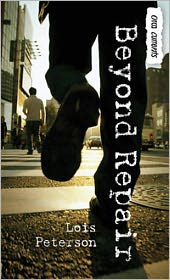
Orca Book Publishers have been extremely gracious to allow me to review Beyond Repair prior to its release date of April 1, 2011.  The synopsis is as follows: “Since the death of his father, everyone has been telling Cam that he’s the man of the house.  Cam takes his responsibility seriously.  He keeps the grieving household organized and takes care of his sister.  But when the man who had been driving the truck that killed his father seems to be stalking his family, he is not sure he’s up for the task.  How does the man of the house handle a stalker?”

________________________________________

Orca Book Publishers is an organization that produces fiction for reluctant readers, especially readers on the lower spectrum, with a reading level between second grade and fourth grade.  Beyond Repair comes from the Orca Currents series, which is for those ages 10-14, and is written in a way that the reader, especially a reluctant reader, can easily understand.  

This is a very interesting coming of age novel.  While one could argue that it is about a young man dealing with a possible stalker, it is so much more than that.  Cam must step up and protect his family, but he must also deal with the emotional angst that is eating away at his soul.  At the same time, he must decipher fact from fiction and control his overactive imagination before it gets the best of him. 

I really enjoyed following Cam on his journey to manhood as he tried to make sense of his torn up world.  Peterson does a wonderful job with this story, from the disposition of the characters to the dialogue used within the text.  Although this is a fictional story, it is real on so many levels, and causes the reader to identify with the characters.  There is no down time within the story, and it is very fast paced, which will captivate readers from all different spectrums.  The only downfall to the novel that I can see is that it ends.  I wish it was longer!  Four stars.


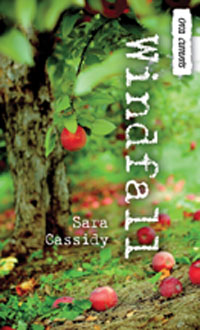
{March 22, 2011}   Windfall, by Sara Cassidy

Orca Book Publishers have been extremely gracious to allow me to review Windfall prior to its release date of April 1, 2011.  The synopsis is as follows: “Life is full of challenges for thirteen-year-old Liza.  She is already having trouble coping with the death of a local homeless man when she learns that her family’s apple tree will need to be chopped down.  If that wasn’t enough, the new principal at school keeps blocking her attempts for a positive outlet by refusing permission for every project that GRRR! (Girls for Renewable Resources, Really!) and BRRR! (Boys for Renewable Resources, Really!) proposes. Liza starts to feel like she needs to create change in her world without seeking permission. When she chooses the school grounds as the site for her latest endeavor, she may have gone too far.”

________________________________________

Orca Book Publishers is an organization that produces fiction for reluctant readers, especially readers on the lower spectrum, with a reading level between second grade and fourth grade.  Windfall comes from the Orca Currents series, which is for those ages 10-14, and is written in a way that the reader, especially a reluctant reader, can easily understand.  

We’ve all been there… we see a homeless person on the street and we become uncomfortable.  To see someone in such a sad state should cause us to lend a helping hand, but rarely is that the case.  Most of us would rather cross the street than walk near the homeless, a sad, but true fact.  In our world, there are many dangers, and unfortunately, strangers and the homeless tend to be feared in our society.  Windfall is unique in that is in a fictional book dealing with the death of a homeless man, Richard, and its effect on the children and families that live in the area.  Liza questions her nonchalant attitude toward the homeless and ultimately comes of age through Richard’s untimely death as she decides to give back to society.  While an explicitly environmental novel, I think many middle grade students will enjoy this novel, and hopefully be inspired to give back to the community and take care of the environment at the same time.  I was inspired by the projects that GRRR! and BRRR! take on within the novel and I found this novel a refreshing way to look at society as it is today.  While the main characters are middle grade students, and the novel lends itself to that age group, I believe this novel will also interest high school students as well.  I highly recommend it for any green thumbs out there, and anyone looking to make a difference.  Four stars.

Interested in helping the homeless?

http://www.commonground.org/

http://www.self-sufficiency.org/

www.childrenshealthfund.org

www.umom.org

www.diabetes.org


Check out my Orca Book Publishers page for more information, titles, and reviews for reluctant readers!


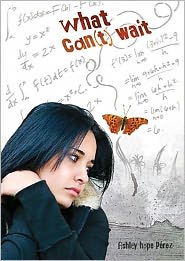
Lerner Publishing Group and Carolrhoda Lab have been extremely gracious to allow me to view an eBook version of this book on NetGalley.  It was just released on March 1st, and is a superb read!!  The synopsis is as follows: “‘Another day finished, gracias a Dios.’  Seventeen-year-old Marisa’s mother has been saying this for as long as Marisa can remember.  Her parents came to Houston from Mexico.  They work hard, and they expect Marisa to help her familia.  And they expect her to marry a boy from the neighborhood, to settle down, and to have grandbabies.  If she wants a job, she could always be an assistant manager at the local grocery store.  At school, it’s another story.  Marisa’s calc teacher expects her to ace the AP test and to get into an engineering program in Austin—a city that seems unimaginably far away.  When her home life becomes unbearable, Marisa seeks comfort elsewhere—and suddenly neither her best friend nor boyfriend can get through to her.  Caught between the expectations of two different worlds, Marisa isn’t sure what she wants—other than a life where she doesn’t end each day thanking God it’s over.  What Can’t Wait—the gripping debut novel from Ashley Hope Pérez—tells the story of one girl’s survival in a world in which family needs trump individual success, and self-reliance is the only key that can unlock the door to the future.

___________________________________

This is a beautifully told story about the hardships of cross-cultural children.  Much like The Joy Luck Club, Marisa finds herself trapped between family obligations and personal wants and needs.  Her family does not understand her want for an education, and Marisa’s struggle between family and independence intricately weaves itself throughout the entire novel.

The character development was phenomenal, and I really felt like I personally knew Marisa.  In fact, each character within the novel is presented in such an unadulterated light that I felt like I knew them all.  I’ve met people just like these characters, and it was really fun to draw out the similarities and differences between the characters and people I actually know.  Pérez does an exemplary job fleshing out each character, and their stories all intertwine flawlessly.  The usage of Spanish intertwined with English was a beautiful touch on Pérez’s part, and it made the story that much more genuine. 

I was really able to grasp the hardships that cross-cultural children go through as Marisa desperately tries to adhere to her home culture while embracing her American culture as well.  This novel is a real eye opener, and you will laugh and cry along with Marisa as she tries to find her place in the world.  The amount of responsibility put on Marisa is mindboggling, and it really brought home to me how little I really know about my students’ lives.  I kept identifying with Mrs. Ford as she pushed Marisa to her limits, not realizing the negative effects of such a push, or the amount of pressure on Marisa from her family and culture.  This novel was a real eye opener for me, and I believe it will be for all who read it.  I hope to see this novel in the 10th grade world literature curriculum in high school, as it is a wonderful depiction of the struggles and triumphs of cross-cultural children.  I am adding this to my outside reading project for students!  Five stars!


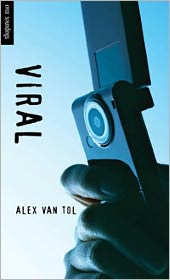
{March 20, 2011}   Viral, by Alex Van Tol

Orca Book Publishers has been extremely gracious to allow me to review Viral prior to its release date of April 1, 2011.  The synopsis is as follows: “Mike has fallen deeply in love with his best friend, Lindsay. And he’s pretty sure she feels the same way…until a simple misunderstanding destroys Lindsay’s trust. Devastated and feeling betrayed, Lindsay leaves town for the summer. In the fall, she returns to school a different person and she’s suddenly tight with the “in” crowd. When Lindsay gets intoxicated at a party and ends up in a compromising situation, she has no idea that someone is filming the whole thing on his phone. When the footage goes viral around their school, Mike has to dig deep within himself to find the courage to help Lindsay in her time of greatest need.”

_____________________________________

Orca Book Publishers is an organization that produces fiction for reluctant readers, especially readers on the lower spectrum, with a reading level between second grade and fourth grade.  Viral comes from the Orca Soundings series, which is for those ages 12+, and is written in a way that the reader, especially a reluctant reader, can easily understand.  

How do you help someone who doesn’t want to be helped?  This the question to which Mike must find an answer, and it is a great question to ponder.  If we were in a similar situation as Mike, watching destructive decisions unfold, what would we do?  Van Tol leaves this philosophical question up the reader in this captivating narrative dealing with teenage angst and revenge. 

Any reader will be able to relate to this story through its fast paced storyline and interesting plot, and it will not only captivate reluctant readers, but all readers across all spectrums.  Van Tol’s use of technology within the story aids the plot and adds to the horror within the novel, as Mike’s peers misuse technology to destroy another.  I was captivated by this novel, and the ending was phenomenal!  I highly recommend this for all reluctant readers, but advise everyone to read it as the interest level and moral themes are for everyone.  Five stars.

Check out my Orca Book Publishers page for more information, titles, and reviews for reluctant readers!


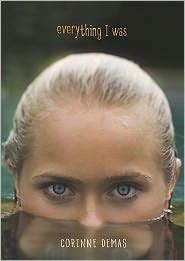
Lerner Publishing Group and Carolrhoda Lab have been extremely gracious as to allow me to review an ARC of this novel, via Netgalley, prior to its release date of April 1, 2011.  The synopsis is as follows: “‘My walls were stripped, and all that was left in the room was a pile of boxes and my mattress propped against the wall.’  So begins Irene’s journey from an Upper West Side penthouse to—well, she’s not entirely sure where.  Irene’s investment banker father is “downsized” when his company merges with another.  When he can’t find work, her family’s lifestyle—and her socialite mother’s spending—quickly catches up with them.  Eventually, they’re forced to move in with Irene’s grandfather in the big family farmhouse upstate.  But what begins as the most disastrous summer of her life takes a surprising turn when she meets a most remarkable family.  Everything I Was is the story of a young woman deciding what she wants for herself after she thought she’d lost everything.”

_________________________________________

This was a very cute coming of age story, and Demas does a wonderful job showing the difficulties children face in this uncertain time.  Although never explicitly stated, this novel takes a hard look at the current economic situation with which the world is struggling, an aspect we don’t see very often in fictional novels.  Irene’s father loses his job as his corporation merges and downsizes, effecting his family’s life of luxury.  As the money wanes, Irene finds herself uprooted from her extravagant lifestyle and living on her grandfather’s farm.  What I really love about this novel is that it takes a detailed look at the effects of our economy on children.  Because children aren’t the breadwinners in the household, and because they tend to live more carefree lifestyles, they are often overlooked in terms of thoughts and feelings as they deal with the constant changes happening around them.  Told from the point of view of thirteen-year-old Irene, Demas does a wonderful job exploring Irene’s disposition as her life constantly changes.  I really enjoyed this novel and it forced me to stop and think about life, and how we are all affected by change.  I highly recommend this novel for all young adults and anyone with children.  Four stars.


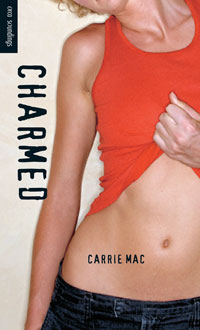
{March 18, 2011}   Charmed, by Carrie Mac

Synopsis from Orca Books: “Izzy finds she is one in a long line of girls ensnared in prostitution, with no way to escape.  Izzy’s mother works far away and leaves Izzy at home, alone with Rob the Slob. Angry at her mother and trying to deal with school, friends and the attentions of charismatic Cody Dillon, Izzy finds her life swirling out of control. Coerced into putting out to help Cody, Izzy finds she is one in a long line of girls ensnared in prostitution, with no way to escape. Believing that her mother will come for her, Izzy manages to fight back and, when the chance appears, make a run for it.”

__________________________________

Orca Book Publishers is an organization that produces fiction for reluctant readers, especially readers on the lower spectrum, with a reading level between second grade and fourth grade.  Charmed comes from the Orca Soundings series, which is for those ages 12+, and is written in a way that the reader, especially a reluctant reader, can easily understand.  

As I read this novel, I kept pleading aloud with the main character, Izzy.  She is such a naïve teenager, looking for love and acceptance, as those she loves continually spurn her.  When her mother fails to take her daughter’s side, and instead sides with Rob, her lowlife live-in boyfriend, Izzy hits rock bottom.  Her mother asks her to move out and live with a friend for the next six months, until she returns from her job at the logging camp.  Hurt and resigned, Izzy seeks help from her new beau, Cody Dillon—a gorgeous high school dropout who is heavy into drugs.  Of course, nothing is what it seems in the life of Cody Dillon, and Izzy soon finds herself sucked in to a vicious ring of drugs and forced prostitution.

This book broke my heart.  It deals with a very difficult subject; one that society would rather sweep under the rug.  Izzy is a troubled young woman, becoming invisible in a society that views acting out as a behavioral problem and not a cry for help.  Although this novel is fiction, Izzy’s situation is very real, and many female teens fall prey to drugs and forced prostitution due to their naivety and lack of parental supervision.  This book is not only for teens, but also for parents.  It calls for parents to value their children and to always put them first.  I think this is a great book for young adults to read as it puts everything in perspective, and will help both young adults and parents become more knowledgeable in terms of protecting themselves and their loved ones.  Five stars.

Check out my Orca Book Publishers page for more information, titles, and reviews for reluctant readers!


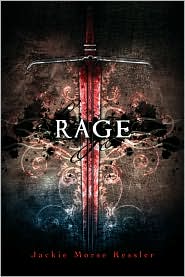
{March 17, 2011}   Rage, by Jackie Morse Kessler

Houghton Mifflin Harcourt was so gracious to allow me to read an ARC of this novel, through Netgally, prior to its release date of April 8, 2011.  The synopsis of the novel is as follows: “Missy didn’t mean to cut so deep.  But after the party where she was humiliated in front of practically everyone in school, who could blame her for wanting some comfort?  Sure, most people don’t find comfort in the touch of a razor blade, but Missy always was . . . different.  That’s why she was chosen to become one of the Four Horsemen Apocalypse: War.  Now Missy wields a different kind of blade—a big, brutal sword that can cut down anyone and anything in her path.  But it’s with this weapon in her hand that Missy learns something that could help her triumph over her own pain: control.  A unique approach to the topic of self-mutilation, Rage is the story of a young woman who discovers her own power, and refuses to be defeated by the world.

________________________________

While this novel is the second in a series, it is a stand alone novel, for which I was grateful as I have not yet read Hunger.  I have ordered it though, because Kessler did an amazing job with her teen angst novel and she caught, and held, my attention from the very first sentence.  I loved the beginning of the novel, and even though I was left with questions pertaining to the dead cat, and the long box, etc., Kessler eventually answers those questions throughout the story.  Waiting for those answers helped create suspense and added to my inability to put the novel down. 

I love the way Kessler creates her novel around the social issue of cutting.  Melissa Miller becomes War, the Red Rider of the Apocalypse, which is fitting as Melissa is at war with herself as she tries to fight the urge to cut.  Cutting is a very real issue in our society, and Kessler ingeniously relates cutting and the war within oneself by using the Four Horsemen of the Apocalypse.  This metaphoric story will steal your attention and keep you turning the pages as the story quickly unfolds.  While at times I did find the text a little wordy, Kessler does a phenomenal job pacing the story and keeping a high interest level. 

I would love to say that the characters surrounding Melissa are unrealistic, unfortunaltey, I know they are not through my personal experiences in high school, and the experiences I now note as I teach high school.  We’ve all heard the age-old adage that “children are cruel.”  Sadly, that does not end when children become teens.  If anything, it tends to get worse.  It amazes me that children and teens are more interested in fitting in than in saving another’s life.  They tend to think that speaking out against cruelty, or telling a teacher or guidance counselor that someone they know needs help, is committing social suicide.  I don’t understand this, since much of it can be done anonymously, but it is a rare case indeed for a young adult to sympathize with someone outside their social group.  The way Melissa’s peers and coach treat her shows societies lack of concern and inability to understand what is not considered the “norm.”  I was very angry with Melissa’s peers as I read, and I found myself yearning for retaliation, just as War urges Melissa to do the same.  Her inner struggle is breathtaking to read, as she not only deals with the struggle of cutting, but also the struggle of doing what is right and containing her rage.  It is not sugarcoated, and there is no fairytale ending, which I believe makes the hard truths of this novel that much more authentic.

This is a wonderful novel for young adults, and its message is not lost on the reader.  I plan to put this out the outside reading list for my students as I think it has a wonderful message that no one can hear too often.  Four stars.


{March 16, 2011}   Jacked, by Carrie Mac

Synopsis from Orca Books: “As far as Zane knows, today is just another boring day at his boring gas-station job. Until he gets carjacked by a masked gunman. Zane has no idea where they’re going or what will happen when they get there. All he knows is that the lunatic in the passenger seat has a gun aimed at him. Zane tries to reason with the guy, and when that fails, he tries a couple of daring stunts to get free, but they backfire. They’ve been on the road for a long time before Zane’s fear starts to ease just a little, enough for his curiosity to take over. His captor has had several opportunities to hurt him or punish him for trying to get away, but he hasn’t. Zane starts to wonder who this guy is. And what he really wants.”

____________________________

Orca Book Publishers is an organization that produces fiction for reluctant readers, especially readers on the lower spectrum, with a reading level between second grade and fourth grade.  Jacked comes from the Orca Soundings series, which is for those ages 12+, and is written in a way that the reader, especially a reluctant reader, can easily understand.  

This novel has a great storyline and it immediately jumps into the action, hooking the reader.  There is hardly any wait time for the thrills to begin; Zane is carjacked within a few pages of the novel, and the intensity of the carjacking will have the reader rapidly turning the pages.  While I believe the carjacker’s identity and intention was revealed far too soon within the story, removing much of the suspense, the story does not end there.  The reader will still be pressed to read on as Zane must decide between doing what is right and doing what is easy.  Both the identity and the intentions of the carjacker are not what you’d expect!  Three stars.

 Check out my Orca Book Publishers page for more information, titles, and reviews for reluctant readers!


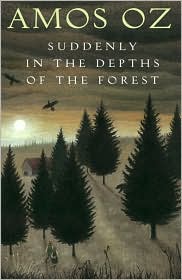
Houghton Mifflin Harcourt has been so gracious as to allow me to review an ARC of this novel, through Netgalley, prior to the novel hitting bookstores March 21st!  The synopsis is as follows: “In a gray and gloomy village, all of the animals—from dogs and cats to fish and snails—disappeared years before. No one talks about it and no one knows why, though everyone agrees that the village has been cursed. But when two children see a fish—a tiny one and just for a second—they become determined to unravel the mystery of where the animals have gone. And so they travel into the depths of the forest with that mission in mind, terrified and hopeful about what they may encounter.”  

___________________________________

I am sorry to say that I am not a fan on this novel, however, I believe it is perfect for middle grade readers.  This novel is geared toward 10-14 year olds, and the writing is very clear and concise.  When I first picked up the novel, I thought it would be similar to The Messenger and The Giver  by Lois Lowry.  In a way, it was similar, but it was also unique unto itself. 

My main issue with this novel deals with the repetition and writing style utilized, but keep in mind that I am an adult reviewing a middle grade novel, so of course I am going to see it differently than the audience it is intended for.  To me, the constant repetition of events is overbearing.  I do not like repetition unless it is absolutely necessary, and the vast amount of repetition within this novel is monotonous.  In terms of the writing, quotation marks were not utilized, and that is one of my pet peeves.  However, as the novel is written in a sing-song style, and is meant to be read aloud, I do understand the lack of quotes. 

In terms of repetition and the writing style, I don’t think middle grade readers are going to have any qualms.  I highly doubt they will be zoning in on these aspects, but rather only the story itself.  On that note, I think the novel ended very abruptly, and I wanted more—there was a lack of closure, and I believe that middle grade students will agree with me in terms of the ending.  I hate to be left hanging, filling in the story on my own.  Two stars.


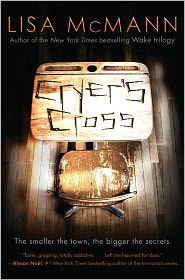
Synopsis from the dust jacket: “The small town of Cryer’s Cross is rocked by tragedy when an unassuming freshman disappears without a trace.  Kendall Fletcher wasn’t that friendly with the missing girl, but the angst wreaks havoc on her OCD-addled brain.  When a second student goes missing—someone close to Kendall’s heart—the community is in an uproar.  Caught in a downward spiral of fear and anxiety, Kendall’s not sure she can hold it together.  When she starts hearing the voices of the missing calling out to her and pleading for help, she fears she’s losing her grip on reality.  But when she finds messages scratched in a deck at school—messages that could only be from the missing student who used to sit there—Kendall decides that crazy or not, she’d never forgive herself if she didn’t act on her suspicions.  Something’s not right in Cryer’s Cross—and Kendall’s about to find out just how far the townspeople will go to keep their secrets buried.” 

______________________________________

I regret to say that I didn’t really enjoy this novel.  Most of the reasons, I believe, are based on personal preference and not necessarily on McMann’s writing capabilities.  For instance, I don’t like change.  Change is difficult for me; and the writing style of this novel is extremely unique and different.  Hence, I struggled with it.  This novel is told using the third person narrative, but it is completely in present tense.  Hence, it reads more as a play-by-play of events: “Kendall looks at the grass… the whole team stares at the ground, nobody daring to look up.”  This is actually the first novel I’ve ever come across that uses this style, and it was so different from what I was used to that I became extremely distracted by it.  Again, like I said, change is difficult for me, but that doesn’t mean you won’t like it (unless you’re just like me).  The writing style reminded me of the way a play is written, and I believe many people will enjoy this fresh style of writing; it’s just not for me.

Another reason I did not enjoy the novel is because I believe the dust jacket is misleading, therefore ruining my expectations for the novel.  Upon reading the synopsis, I was really interested—a whole town is burying a secret, and children are disappearing!  This sounds like a horror flick!  However, upon finishing the novel, I found that the townspeople aren’t trying to keep a secret buried at all—they don’t know the reason for the disappearances either.  Only two men are aware that the evil exists, but they never believed it could transcend into the real world, so I wouldn’t call that keeping a secret either.  Finding that out was somewhat of a letdown for me.

The novel focuses on Kendall’s OCD a lot, which is interesting because I have never been around someone with OCD, so I had no idea what life could be like for those people.  However, I feel like too much time was spent on Kendall and her life, as opposed to figuring out what happened to the missing teenagers.  A lot of the novel deals with soccer, and the rest tends to deal with OCD—only a small portion really deals with the mystery aspect.  I think that is why the ending confused me.  It was very quick and, to me, anticlimactic, which is a shame because I had high hopes for this mystery novel.  I’m giving this novel one star in terms of my personal preferences and likes/dislikes, but you may find that you really enjoy this novel, so don’t necessarily write it off unless you’re just like me. 


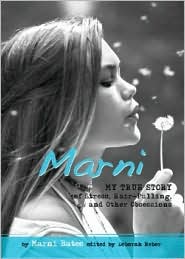
From the dust jacket: “Unable to deal with the mounting stress at home, in school, and with friends, Marni’s compulsion to pluck out her eyebrow, eyelashes… even the hair from the top of her head, helped her to quiet her mind and escape the pressures of the world around her.  Marni first began pulling the summer just before entering high school, and she was immediately hooked.  Unfortunately, by the time she discovered that her habit was an actual disorder—trichotillomania or “trich”—it was way too late.”

_______________________________________

I tend to stay away from nonfiction accounts, especially recent publications, because I find them very depressing.  One of my students handed this novel to me the other day and asked me to read it, as he/she would like permission to read it for our outside reading project.  Of course, I obliged, though with trepidation. 

Bates is a gifted writer.  She is able to transcend her thoughts to the paper in beautiful prose, evoking passion within the reader.  I really did enjoy the writing style.  The memoir itself, however, was less to my liking.  I was surprised to find that a very small portion of the memoir actually deals with Bates’ obsession with pulling.  I read through 90 pages (of the 159 page book) before “trich” was even mentioned, save the very beginning of the novel.  Yet, when the topic first comes to light, even then it is not elaborated upon.  After a few more chapters, the pulling Bates subjects herself to does come to the forefront, but I was disappointed that such a small portion of the novel was actually dedicated to pulling, especially since that is what the synopsis claims the memoir is about.  

Instead, Bates’ memoir deals with every bad incident that ever happened to her; I believe she does this to lead up to her reasons for pulling, but I think this tactic actually has an adverse effect on the reader.  The more I read, the more I began to hate her father, her sister, her teachers, her peers… because Bates presents everyone in a horrible light.  Although she later tries to portray some of these people in a more positive way, the damage has already been done… nothing she could say could make me like her family any better.  I think this is one of the reasons memoirs can be very dangerous.  In this day and age, society tends to focus on everything negative; we play the victim far more often than not.  I don’t know why we do that, but I’m guilty of the same, and it is with a constant effort that I have to remind myself of all the good things I have in my life.  I think Bates needs to do the same in order to begin to heal.  Constantly dwelling on the bad in our lives is a depleting activity that leaves everyone depressed.  Hence, I am not really a fan of this memoir.  However, I am interested to see my student’s reaction to this novel, so I am putting it on the list.  Until then, I’m giving it one star.


{March 12, 2011}   Cellular, by Ellen Schwartz

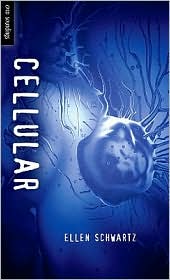
Synopsis from Orca Books: “Brendan has it all-captain of the basketball team, good friends, a beautiful girlfriend and a loving family—until he is diagnosed with leukemia. Terrified and convinced that no one understands what he is going through, Brendan faces chemotherapy alone, until he meets Lark. She is also in treatment, although her condition is much worse, and yet she remains positive and hopeful. Brendan is torn between feeling sorry for himself and the love for life that Lark brings to even the simplest thing. Through Lark, he discovers the strength to go on, to fight for survival and to love.”

_____________________________

Orca Book Publishers is an organization that produces fiction for reluctant readers, especially readers on the lower spectrum, with a reading level between second grade and fourth grade.  Cellular comes from the Orca Soundings series, which is for those ages 12+, and is written in a way that the reader, especially a reluctant reader, can easily understand.  

Wow.  I never thought such a short book could pack so much emotion!  I was reading Cellular during my break at school today, and I had to put it aside because I was on the verge of tears!  This is a very powerful and emotional book about a boy trying to deal with a death sentence: Leukemia.  I was not prepared for my emotions to be rubbed raw as I read about Brendan undergoing treatment, or how those around him reacted to his illness.  I broke down at the conclusion of the novel, something I’m not used to doing in regards to a book.  Schwartz does an amazing job capturing the fear and heartache Brendan, and his family, undergo as he battles cancer in hopes of survival.  I highly recommend this novel as it puts everything in perspective and will make you count your blessings.  Five stars.

Check out my Orca Book Publishers page for more information, titles, and reviews for reluctant readers!


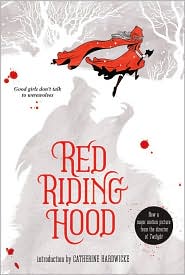
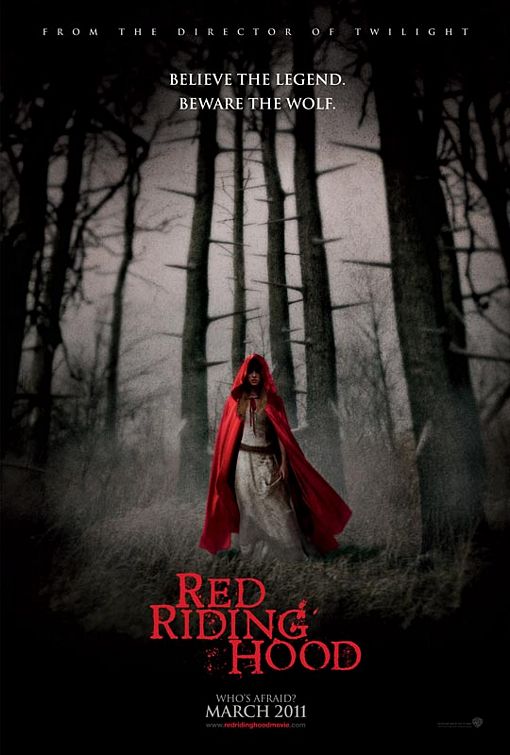
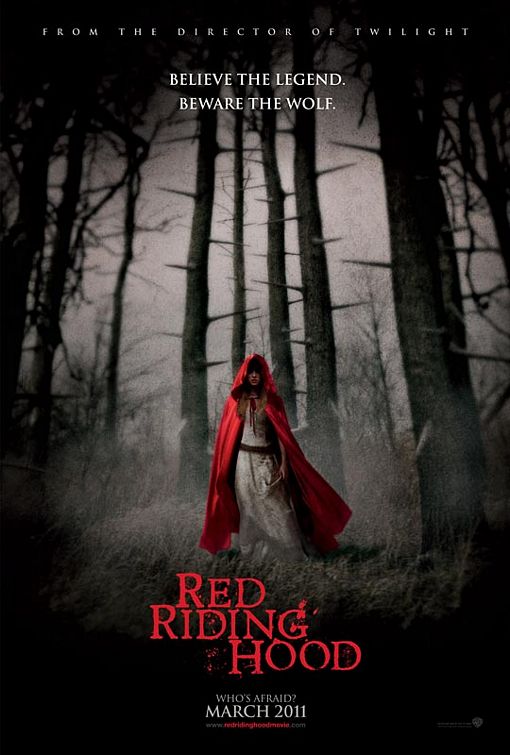
Synopsis from the dust jacket:  “The bell tolls one, two, three times in the village—someone has been murdered.  It clangs a fourth time… the killer was the Wolf.  In a time when villages are so small that everyone knows everyone else, one girl struggles to find her own was.  Valeria is not a “good girl.”  When the local were-wolf singles her out, Valerie must make an impossible choice.  With a marriage being forced upon her and a true love asking her to run away, Valerie has no one to turn to.  Her father is the town drunk, her mother wants to control her, and the other girls—they quickly turn her in as a witch.  Who will save her?  Or can Valeria save herself?  In this dangerous, riveting new vision of a classic fairy tale, the happy ending may be hard to find.”

__________________________________

This was a hard review to write because the movie and book go hand in hand, and one cannot write an unbiased book review without having viewed the movie, since the novel was written as its companion.  According to Catherine Hardwicke’s introduction in the book, “the characters and their backstories were too complex to fit into the film, so [she] wanted to help create a novel to fully explore the tangled web of emotions in the village of Daggorhorn.”  Hence, without viewing the movie, it is hard to tell whether the novel really served its purpose.  So, I went out to see the movie today. 

Here were my expectations:  As the script for the movie was completed first, I expected that the movie and novel would be identical, with a little more detail in the book.  I also expected the novel to be somewhat bland, since most movies turned books aren’t written very well, and for the movie to be much better.  I was truly worried about reading the book, especially since there is so much bad press about the novel.  However, I highly enjoyed the book!  Well, except for the part where I have to wait until March 14th to read the final chapter, but…  I was enthralled by the story, which loosely ties in with the original fairytale.  Of course, being a fan of the paranormal, I liked this version better—werewolves make everything better!  Though a little bloody and gruesome for my taste, I think Blakley-Cartwright did a decent job fleshing out the original script by Johnson in her novel.  Yet, here is my concern: while Blakely-Cartwright did a great job adding vivid details to the script, I do not believe all of the backstories and emotions were evolved, like the claim.  Technically, I don’t think this took away from the novel too much, as the “here and now” of the story is very well done, but I would have liked some definite answers instead of elusive ones.  For instance, why is there a werewolf plaguing the city in the first place?  And, how did Peter and Valerie’s relationship blossom into full-blown love in one evening?

Having these questions after reading the novel made me wonder how the movie rendition would deal with them.  The answer?  It doesn’t.  In fact, the entire beginning of the novel is cut out in the movie!  All the background information is gone.  There is no answer as to why or how the werewolf exists, or why it plagues the village.  In terms of my query about such a fast-paced love, the movie changes that aspect around and actually does a much better job; it’s no longer an immediate love situation.  Instead, Peter and Valerie are presented as already being in love when the movie begins.  I liked this aspect better because it became more believable, but then the question becomes, why would Blakley-Cartwright change it in the first place?

That being said, I still like the beginning of the novel better than the beginning of the movie.  But, as the story goes on, the movie and the book begin to coincide, which was nice.  It was as if the movie finally pulled itself together.  However, just like any movie, it’s very fast paced and choppy, moving from one scene to the next with little to no explanation.  As I was sitting there watching, I kept wondering what those around me thought, especially if they hadn’t read the book.  I think I would have been a little clueless at points had I not read it first, so I can only imagine what was going through other moviegoers minds.  The movie actually reminded me of the Twilight, of which I was not a fan due to the quick action and lack of detail, but seeing as Catherine Hardwicke directed both, I think that explains it all.

I finally know the ending, but I’m still going to read the final chapter when it comes out because, who knows… it might change?  Seeing as there are vast differences between the novel and the movie, I think there might be a good chance the endings are different too.  One of the differences in the movie actually lends itself to the conclusion of the story.  Since it was not included in the novel, I am wondering where the novel plans to take it.  I was astounded to find out the identity of werewolf really as per the movie, so I am dying to know how the book will conclude.  You can read the final chapter HERE on March 14th.

Overall, my recommendation is this:  watch the movie first, and then read the novel (wait until the final chapter is released).  This way you won’t be as disappointed in the movie, and as you read the novel you will be able to say, “Oh… that makes sense now…”

Two stars for the MOVIE:


Three stars for the NOVEL:


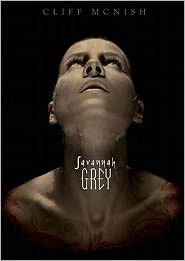
{March 10, 2011}   Savannah Grey, by Cliff McNish

Lerner Publishing Group has been so gracious to allow me to review this book, via Netgalley, prior to its release date in April!  The synopsis is as follows: “Savannah Grey needs to keep moving. She doesn’t know why, but she can’t let herself get tied down by too many people. It’s almost like she’s being chased by something. And now something strange is happening with her neck—with her throat.  Then she meets Reece—a guy who seems to understand her needs. He even knows about her neck. The same thing is happening to him. It’s as if their voices are becoming weapons, warming up for some kind of attack.  Nature has been preparing for battle with the universe’s ultimate monster for millennia. The time to fight is almost here. The weapon is Savannah Grey.”

__________________________________

Savannah Grey is a completely original, refreshing story about a teenage girl trying to find her way, and purpose, in the world.  Wrought with monsters and the ultimately evil Orcrassa, this novel will keep you glued to the pages as the story of good versus evil unfolds.  I read this novel in one sitting, and though I admit I was perplexed and frustrated at points, the redeeming factor of the novel is the huge twist that presents itself three quarters of the way in.  I love twists in novels, and if the author can jar me as I read, then I find myself recommending the book to others, regardless of my  prior frustrations—and that’s exactly what I’m doing now.   

First, let me explain why I was occasionally perplexed and frustrated with this novel.  While I love fantasy and the paranormal, I am also a realist, and want my fantasy and paranormal novels to fall within certain guidelines.  For instance, even fantasy and paranormal setting have a hierarchy, and adult supervision is present in terms of police, parents, teachers, etc., because that is the universal reality of life.  However, in Savannah Grey, the adult world barley exists.  If a hospital is forced to evacuate due to a predator (in this case a monster), and much blood is shed, I expect to see police and adults swarming the scene, attempting to help, or at least figure out what happened.  I would expect the same if a teenager went awol during surgery and disappeared, or if they nearly destroyed a restaurant, or suddenly became extremely aggressive and strong.  Because these are not everyday occurrences, I expect adults to be perplexed and try to help.  However, the adult world seems to disregard all that happens within this novel. Savannah Grey’s foster mother’s presence is barley felt; she is very minimal and does not question Savannah, but rather lets her do as she pleases.  The police are not mentioned at all, a few uninvested hospital attendants come and go, but other than that, the adult world remains in the background unseen.  I realize that this is fantasy, and that adult supervision does not need to be present, but I think the story would have been more powerful if more emphasis were put on the adults’ inability to help or understand what was happening, versus removing their presence from the story altogether. 

Now, what I loved about the novel was the two different storylines that ran parallel to each other.  Savannah Grey tells her story through the first person narrative, which is perfect as it limits Savannah’s insight into other characters.  Hence, there is more suspense because neither the reader, nor Savannah, can see the thoughts of those pursuing her, thus limiting the ability to perceive what will happen next.  While Savannah’s story is at the forefront, McNish also includes chapters sporadically placed throughout the novel, in which he tells the background story of the Orcrassa.  The Orcrassa’s story is told solely through the third person narrative, so the reader is able to know everything about the Orcrassa in small increments (i.e. it’s development in the world, what it yearns for, how and why nature is trying to destroy this vast evil, etc.).  While I was originally confused and frustrated by these seemingly unconnected stories, it is through this technique that the reader learns the truth about the fight between nature and the Orcrassa, and it is here that McNish releases the twist.  I have to say, I really was shocked by the twist; I never saw it coming, even though, in retrospect, there are so many tale-tell signs.  For the most part, I really enjoyed this novel.  Three stars.

I believe this novel was first published in the UK, sometime in 2010, as it seems to already be available on Amazon and Barnes and Nobel.  There is no pre-order, and it states that it usually ships within 24 hours.  That being the case, you can pick up your copy now, without the wait!


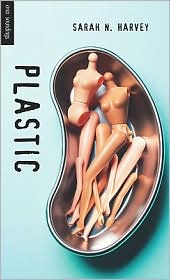
{March 9, 2011}   Plastic, by Sarah N. Harvey

Synopsis from Orca Books: “In our beauty-obsessed culture, standing up against the drive to perfection can have some disastrous consequences.  When Jack develops an interest in something, he puts his all into it, making lists, doing research, and learning all he can. When his best friend Leah decides to have plastic surgery for her sixteenth birthday, Jack is horrified—and then determined to stop her. Researching the surgery and the results, he finds that there are unscrupulous surgeons operating on the very young, and no one does anything about it. Jack organizes a protest and becomes an instant celebrity. But when someone else takes up the cause and the protest turns violent, Jack is forced to make some tough decisions.”

_____________________________

Orca Book Publishers is an organization that produces fiction for reluctant readers, especially readers on the lower spectrum, with a reading level between second grade and fourth grade.  Plastic comes from the Orca Soundings series, which is for those ages 12+, and is written in a way that the reader, especially a reluctant reader, can easily understand.  

While I liked the main message this book portrays about body image, I had a hard time getting past the breast fetish Jack, the main character, has.  The very first page of the novel begins with Jack listing off forty different words for “breasts.”  He further states that he knows 138 words for that particular anatomy, and then explains how many times he has seen them in the nude, and how much he focuses on them each day.  Now, I do understand why Harvey included the terminology in her novel, but I find myself too old fashioned to condone it.  Honestly, I think the overt emphasis on breasts in the novel, from Jack’s point of view, was unnecessary to the overall story.  This, of course, is a personal preference, but I do not want my children, or students, reading a book in which the main character obsesses over breasts and talks about them non-stop, even if it does relate to the theme of body image and the evils of plastic surgery.  I think I would have been more comfortable if the main character was female, as opposed to a male, but either way I think I still would have been ill at ease.  Yet, even though I was turned off initially, I think Harvey did a very good job pulling the story together in the end, as she began focusing it more on Jack’s plight to expose the harms of plastic surgery, and less on his obsession with female anatomy.  I would recommend this to an older, more mature teen/adult reluctant reader.  Two and a half stars.      

Check out my Orca Book Publishers page for more information, titles, and reviews for reluctant readers!


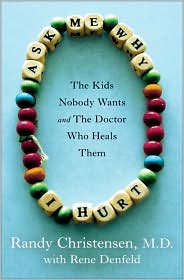
Crown Publishing Group, in conjunction with Goodreads First Reads, offered this book as a giveaway.  I was lucky enough to win one of the ARCs for review, prior to its release April 12, 2011.  

Synopsis from Goodreads: “The unforgettable inspiring memoir of one extraordinary doctor who is saving lives in a most unconventional way, Ask Me Why I Hurt is the touching and revealing first-person account of the remarkable work of Dr. Randy Christensen. Trained as a pediatrician, he works not in a typical hospital setting but, rather, in a 38-foot Winnebago that has been refitted as a doctor’s office on wheels. His patients are the city’s homeless adolescents and children.  In the shadow of one affluent American city, Dr. Christensen has dedicated his life to caring for society’s throwaway kids—the often-abused, unloved children who live on the streets without access to proper health care, all the while fending off constant threats from thugs, gangs, pimps, and other predators. With the Winnebago as his moveable medical center, Christensen and his team travel around the outskirts of Phoenix, attending to the children and teens who need him most.  With tenderness and humor, Dr. Christensen chronicles everything from the struggles of the van’s early beginnings, to the support system it became for the kids, and the ultimate recognition it has achieved over the years. Along with his immense professional challenges, he also describes the trials and joys he faces while raising a growing family with his wife Amy. By turns poignant, heartbreaking, and charming, Dr. Christensen’s story is a gripping and rich memoir of his work and family, one of those rare books that stays with you long after you’ve turned the last page.”

________________________________

Ten years, and 7,000 patients later, Randy Christensen pens his memoir of life helping “the kids nobody wants.”  In 2000, Christensen, along with the help of his colleagues and funding from businesses, started a mobile home clinic in hopes of reaching the homeless children of Phoenix.  Originally under the belief that he could help all his patients better their lives, Christensen shares his experiences, frustrations, heartache, and triumphs as he learns to accept the reality that not all his patients can, or will, be helped.

From the very beginning of the memoir, you will be captivated as Christensen shares the ups and downs of caring for the homeless from the mobile home unit Big Blue.  As patients come and go, Christensen shows the reader the real life atrocities that homeless children live through daily in America.  What is perhaps even more heartbreaking is Christensen’s inability to obtain insurance for most of these children; without birth certificates and identification, Medicaid cannot be obtained.  Since no homeless child has their certificates or identification, the homeless are continually denied insurance, even when their mental and physical health puts them at serious risk of death.  You will rejoice with Christensen as he helps some homeless children achieve their goals in life, and get off the street, and you will cry with him as the system continually overlooks the homeless.  Christensen bares his heart, opening his private life to the reader as well as his professional life; for Christensen, the two go hand in hand. 

This memoir really opened my eyes to the neglect and atrocities taking place in America.  Homelessness is not a comfortable topic for discussion, and all too often these plights are swept under the rug.  After reading this memoir, it is even more apparent that our country is in dire need of health care reforms to protect those who cannot protect themselves. In my opinion, everyone needs to read this memoir.  Christensen is doing amazing work and the world needs to hear about it.  Five stars.

If you are interested in helping the homeless, please visit the websites below:

http://www.phoenixchildrens.com/community/healthcare-outreach/crewsnhealthmobile/

www.childrenshealthfund.org

www.umom.org

www.diabetes.org


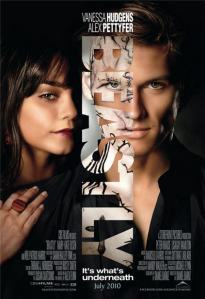
I enjoyed this movie for what it was, but if you’re looking for an exact representation of the book, you’re going to be disappointed.  I don’t think exact representations exist anymore—with all the emphasis on poetic license and selling of rights, I’m not surprised that the interpretations of books to movies have changed so dramatically. 

So, what’s it about?  Here’s a synopsis from the book: “I am a beast. A beast! Not quite wolf or bear, gorilla or dog but a horrible new creature who walks upright. I am a monster. You think I’m talking fairy tales? No way. The place is New York City. The time is now. It’s no deformity, no disease. And, I’ll stay this way forever—ruined—unless I can break the spell. Yes, the spell, the one the witch in my English class cast on me. Why did she turn me into a beast who hides by day and prowls by night? I’ll tell you. I’ll tell you how I used to be Kyle Kingsbury, the guy you wished you were, with money, perfect looks, and the perfect life. And then, I’ll tell you how I became perfectly . . . beastly.”
I felt like this movie was a little forced.  It moves very quickly, especially in the beginning.  If the characters hadn’t constantly explained the timeframe, with lines such as “I asked you to get that for me two weeks ago!” and “don’t you think five months is enough?” then the audience would be completely lost.  I was glad for the clues in terms of time, since this story is supposed to take place over the course of a year (in 86 minutes), but I think the director, Daniel Barnz, could have done a better job portraying the lapse of time.  

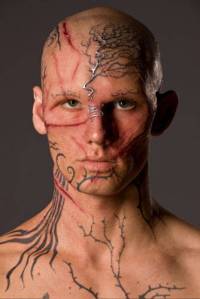
Of course, Kyle Kingsbury, played by Alex Pettyfer, doesn’t look anything like he does in the novel, but I think I like the movie rendition more in terms of that aspect.  In the novel, Kyle is covered with hair, from head to toe, and he has claws.  In the movie, Kyle has no hair, but instead he has tattoos, never healing cuts, scars, and boils.  These changes truly make him ugly—perhaps even uglier than hair and claws.  And, no offence to Pettyfer, but his ears just added to the “ick” feeling when looking at him.  So, I liked the “beast” Barnz chose to portray, especially because I could still see the resemblance between Kyle’s before and after persona; I think too much hair and claws would have taken away from the movie (not an easy sell), so I understand why Barnz changed it, and am glad he did. 

Of course, unnecessary aspects of the story were changed as well, such as the names.  Why?  Why can’t the names remain the same?  Kyle adopts a new name in the novel, after he’s been turned into a beast, and he begins calling himself Adrian.  But, in the movie, his name is changed to Hunter.  Perhaps the screenwriters were trying to create an ingenious name that went along with the “beast” mentality, but I liked Adrian better, and I see no applicable reason to change it.

There were some other changes as well, which disappointed me:  For instance, how Lindy actually ended up at Kyle’s house is different, and instead of portraying Kyle in an unfavorable light, like the book did, this change in the movie makes Kyle out to be some wonderful guy—too early on in the movie.  They also changed the circumstances under which Lindy ends up leaving, and the seasons in which certain events happen are different as well.  I would have liked the ending to be the same as the book—Barnz even set it up so that it could have been—but, of course, they deviated.  The magic mirror was completely missing, which is a shame since that is such a big part of the fairytale, but, overall, I don’t think any of these changes necessarily ruined the story, or took away from the plot.  In the end, the same moral theme is presented, and the boy does get the girl; it’s just different.

The acting wasn’t horrible, but I wouldn’t call it wonderful either.  There is just something about Alex Pettyfer that rubs me the wrong way—I think it’s the way he delivers his lines.  He’s a little bland for my tastes, but I think he’ll get better with time.  I noticed he delivered his lines the same way in I Am Number Four, so I guess this is just his style.  Mary Kate Olsen, who plays Kendra (the witch) was actually suprisingly good in this movie!  I haven’t seen her or her sister acting in a long time, and I think Olsen pulls this off perfectly–though in the books she’s supposed to be fat, but  her portrayal was so good that I can overlook that small detail.  Overall, I liked the movie for what it is.  Of course, the book is still better, but I think that is always the case.  It’s not going to stop me from buying the movie though.  Three stars for the movie. 

Click here to see my book review.


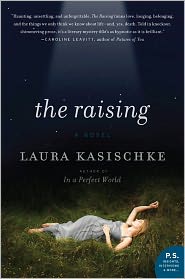
HarperCollins has been extremely gracious to allow me to review this book, through Netgalley, prior to its release date of March 15th, 2011.  The synopsis from HarperCollins is as follows:  “The accident was tragic, yes.  Bloody and horrific and claiming the life of a beautiful young sorority girl.  Nicole was a straight A student from a small town.  Sweet-tempered, all-American, a former Girl Scout, and a virgin.  But it was an accident.  And that was last year.  It’s fall again, a new semester, a fresh start.

Craig, who has not been charged with murder, is focusing on his classes, and also on avoiding Nicole’s sorority sisters, who seem to blame him for her death even though the police did not. 

Perry, Craig’s roommate, is working through his own grief (he grew up with Nicole, after all, and had known her since kindergarten) by auditing Professor Polson’s sociology class: Death, Dying, and the Undead. 

Mira has been so busy with her babies—two of them, twins, the most perfect boys you could imagine, but still a nearly impossible amount of work even with Clark’s help—that she can barely keep herself together to teach (Death, Dying, and the Undead), let alone write the book she’ll need to publish for tenure. 

And Shelley, who was the first person at the scene of the accident, has given up calling the newspapers to tell them that, despite the “lake of blood” in which they keep reporting the victim was found, the girl Shelly saw that night was not bloody, and not dead.”

_____________________________________

If you’re looking for a good mystery, one that will chill you to the bone and keep you guessing through multiple twists and turns, then you need to read this novel!  This story interweaves the lives of four people on a college campus, all in relation to Nicole, a young girl killed in a horrible car crash.  Each chapter focuses on a different character within the novel—sometimes relaying events in the present, and sometimes relaying events from the past.  This brilliant literary technique will keep you enraptured and glued to the pages.  As events unfold, new information comes to light and, page by page, the story slowly begins to unravel. 

I thoroughly enjoyed the characterization, especially because the characters were as real as you and me.  Kasischke does a wonderful job creating and developing them, and the twists and turns within the novel keep the reader wondering who these people really are.  No one is what they seem, and this revelation is one of the reasons that the mystery within the novel is so captivating.  New information continues to arise, causing the reader to reassess his/her thoughts and beliefs throughout the novel.  While this is an adult novel, with mature themes, language, and sexuality, these aspects actually propel the story forward as we learn about the events leading up to, and after, the fatal car accident. 

I will admit that I was not pleased with the ending, though it does fit the style of writing.  There is no definite conclusion, and the reader is left to piece everything together.  While certain scenarios are strongly alluded to, you will have to decide for yourself.  In all actuality, I believe the ending makes the novel that much more unnerving; the events within the novel could really happen.  Perhaps they already have…  The Raising is a haunting tale of deception and conspiracy; you will never think of sororities the same way again.  Four stars.   


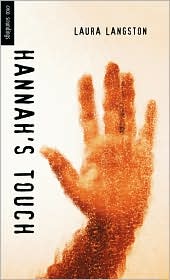
Synopsis from Orca Books: “When sixteen-year-old Hannah gets stung, she rises out of her body, where she’s greeted by her dead boyfriend, Logan, and a loving but unseen presence.  She wants to stay with them.  They say no.  She must go back.  There’s something she must do.  But Hannah can’t figure out what it is.  Nor can she make sense of the weird things happening around her.  Since the sting, she seems to have the ability to heal.  Hannah doesn’t know what to think.  And then she faces another challenge: Logan has a purpose in mind for her new gift.  And it’s a purpose Hannah can’t bear to face.”

_____________________________

Orca Book Publishers is an organization that produces fiction for reluctant readers, especially readers on the lower spectrum, with a reading level between second grade and fourth grade.  Hannah’s Touch comes from the Orca Soundings series, which is for those ages 12+, and is written in a way that the reader, especially a reluctant reader, can easily understand.  

Most of the Orca Books I’ve read so far have dealt with real life situations, and I’ve really enjoyed that, but I’m a huge paranormal junky, so Hannah’s Touch was a real treat!  While still dealing with real life situations and utilizing the coming of age theme, Langston reaches out to readers who also crave a bit of the unexplained. 

After a bee sting nearly kills Hannah, she begins to notice that she’s not exactly normal anymore: she now has the power to heal.  Grappling with her new identity, Hannah must decide what to do with her “gift,” and she must overcome her hurt and anger in order to do what is right.  Langston does a wonderful job capturing the teenage voice in this novel.  Hannah struggles with forgiveness and guilt, both directly related to her boyfriend’s death the previous year.  As the story is told in first person, the reader has firsthand knowledge of Hannah’s thoughts and feelings, which helps keep the reader connected throughout the story.  And, while some of the prose may seem choppy, jumping quickly from one incident to another, it does not take away from the story.  Instead, it quickens the pace, adding to the urgent tone of the novel, as Hannah must make her decision about her new powers soon, before the opportunity is lost.  Three stars. 

This is actually a series book, the second of three.  I have not yet read the other two books, but am on the lookout for them!  My library does not carry them, but as the third book was just released three days ago, I’m sure tracking them down won’t be too hard!  I’ll keep you posted.

Check out my Orca Book Publishers page for more information, titles, and reviews for reluctant readers!


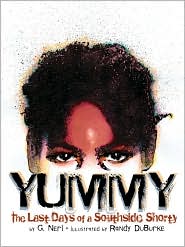
I was extremely excited to pick up my mail today and find a package from Lee and Low Books!  Inside was a copy of Yummy: The Last Days of a Southside Shorty, which is Lee and Low Books’ debut graphic novel!  The graphic novel is based on a true story of gang violence in Chicago, which rocked America to the core in the ‘90s.  This is a very powerful non-fiction book, and the fact that it is in graphic novel format allows the reader to connect to the story in ways traditional novels do not.  In 1994, on Chicago’s South Side, Shavon Dean was killed by a stray bullet shot by gang member Robert “Yummy” Sandifer.  Shavon was fourteen years old.  Yummy was only eleven.  As America watched events unfold and the manhunt ensue, Yummy was ultimately hunted down and executed by his own gang. 

Synopsis: “Eleven-year old Roger is trying to make sense of his classmate Robert “Yummy” Sandifer’s death, but first he has to make sense of Yummy’s life.  Yummy could be as tough as a pit bull sometimes.  Other times he was as sweet as the sugary treats he loved to eat.  Was Yummy some sort of monster, or just another kid?  As Roger searches for the truth, he finds more and more questions.  How did Yummy end up in so much trouble?  Did he really kill someone?  And why do all the answers seem to lead back to a gang—the same gang to which Roger’s older brother belongs?  This gritty exploration of youth gang life will force readers to question their own understandings of good and bad, right and wrong.”

Neri’s graphic novel looks deep into the atrocities that took place the fall of ’94.  Yummy is told from the perspective of Roger, a fictional narrator, as he attempts to understand Yummy and the circumstances behind his death.  Roger is an innocent, a representative of children everywhere, and as he reflects on Yummy’s life and the gang violence surrounding it, he asks important questions and makes stunning observations that only an innocent child could make.  Roger is slow to judge or point a finger, asking pertinent questions about society and forcing the reader to weigh his/her responses carefully.  This narration style is extremely beneficial to young adults.  The simple prose and tone allow for a connection between the reader and the narrator, making the novel that much more powerful.  The graphic art is both beautiful and intricate, and helps tell the story, while also allowing readers to draw their own conclusions and form their own perspectives.  In the end, Roger leaves Yummy’s life and death open to interpretation, asking important analytical and hypothetical questions.  Readers are forced to analyze the world as it is today, and decipher how to make it a better world for tomorrow.  Five stars.


Awards/Recognitions

  • 2011 Coretta Scott King Author Honor
  • 2011 ALA Notable Book 
  • Publishers Weekly Best Books of 2010
  • Kirkus Reviews Best Books of 2010
  • Booklist Editor’s Choice Best Books of 2010
  • 2010 Cybil Award – Best YA Graphic Novel
  • 2011 YALSA Top 10 Quick Picks
  • 2011 ALA Great Graphic Novels for Teens 
  • Booklist’s Top 10 Graphic Novels for Youth
  • School Library Journal Best Comics for 2010
  • CCBC Choices 2011
  • SLJ’s Fuse #8: 100 Magnificent Children’s Books of 2010 List
  • PW Comic Weekly Fifth Annual Critics Poll List
  • Chicago Public Library – Best of the Best Book 
  • Virginia Readers’ Choice List for high school 
  • 2010 Best Books for Youths (Philadelphia Inquirer, Times Union)
  • Top 5 Graphic Novels of 2010 (Guys Lit Wire, Nexus Graphica) 
  • Cynsational Books of 2010
  • 2011 Glyph Award nomination – Story of the Year


et cetera